How Industrial Gas Generators Work
Industrial nitrogen generators and oxygen generators can produce high-purity nitrogen or oxygen on demand for a fraction of the cost of conventional gas supply sources such as cylinders, dewars, or bulk liquid supply.
The Science Behind Nitrogen and Oxygen Generation
Nitrogen and oxygen can be generated from atmospheric air. The air we breathe is composed of 78% nitrogen and 21% oxygen. The remaining 1% is trace gases like argon and carbon dioxide.
Industrial gas generation technology leverages the molecular size difference between nitrogen and oxygen to separate and capture each gas. Nitrogen molecules are much larger than oxygen molecules and we use the size difference between these two molecules to physically separate atmospheric air. This allows industrial gas users to use pressure swing adsorption (PSA) systems to selectively filter and purify gases.
How Do Nitrogen Generators Work?
There are two primary types of technology available for generating nitrogen on site:
Optimization and Recovery of a Pressure Swing Adsorption Process for the Purification and Production of Bioethanol - Scientific Figure on ResearchGate. Available from: https://www.researchgate.net/figure/Schematic-design-of-the-PSA-process_fig1_361776679 [accessed 5 Sept 2024]
PSA Systems
PSA type generators have two pressure vessels that are filled with a material called carbon molecular sieve or CMS. CMS is a very porous material with the ability to adsorb under pressure right down to the molecular level. To produce nitrogen, a compressed air stream is passed through a pressure vessel filled with CMS. The porosity structure of CMS allows the material to capture and absorb the small oxygen molecules as the compressed air flows through. This leaves a stream of nitrogen to flow out the opposite end of the pressure vessel.
Membrane Systems
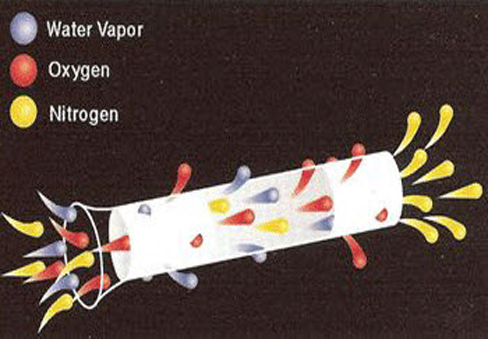
Membrane type generators are used to produce nitrogen only and can be cost effective if nitrogen purities of 98% or less are required for an application. With this type of nitrogen gas generator, a compressed air stream is introduced into the membranes. The membranes are semi-permeable and under pressure the smaller oxygen molecules are filtered out, leaving a stream of nitrogen flowing out the opposite end of the membrane. Membrane type generators are generally considered to be ultra-reliable because there are typically few parts that can fail.
How Do Oxygen Generators Work?
Oxygen generators also use two types of generator technologies to produce oxygen:
However, a different type of sieve material called zeolite is used. Once again, a compressed air stream is passed through a pressure vessel filled with zeolite. The porosity structure of zeolite allows the material to capture and adsorb the larger nitrogen molecules as the compressed air flows through, leaving a stream of oxygen to flow out the opposite end of the pressure vessel.
Take Control of Your Gas Supply with On-Site Solutions
If you’re interested in reducing your gas supply costs and gaining full control over your nitrogen or oxygen production, Advanced Gas Technologies can help you find the ideal system for your application. Our team can walk you through the options, explain the technology in detail, and provide a customized cost analysis.
We sell nitrogen or oxygen gas generating systems outright or install systems on long-term gas supply contracts. Customers who decide to purchase systems outright can typically expect a payback on their capital expenditure within six months to two years, depending on the individual application. Systems installed on gas supply contracts can typically cut ongoing nitrogen or oxygen costs between 40% to 75% with no capital outlay from a prospective client.